Decide what must stay powered
Start with an essential-load list rather than a whole-house promise. Internet equipment, lighting and phone charging have a different energy budget from refrigeration, a sump pump or electric heating. Record both running demand and any startup requirement.
Choose which loads can be scheduled rather than operated together. A station can meet an individual appliance’s load and still overload when another device starts. Prioritizing circuits or appliances is often more useful than buying the largest capacity you can afford.
Capacity does not guarantee a full day
A nominal 1,024Wh battery does not supply 1,024Wh to an AC appliance in all conditions. Conversion losses and station consumption reduce available energy. For a constant 100W example with an assumed 80% usable allowance, the estimate is about 8.2 hours. It is not a measured runtime.
A refrigerator cycles and must be assessed over time. Heating loads can consume stored energy quickly. For outages lasting multiple days, make a recharge plan as well as a battery plan; extra capacity only delays depletion if no charging is available.
Portable appliances versus home wiring
Plugging compatible individual appliances into a station is a different project from connecting home circuits. Do not connect a station to a household wall outlet to feed your wiring. Have a qualified electrician specify a supported transfer arrangement and compatible equipment.
Check voltage, grounding requirements and the manufacturer’s installation instructions. A high output rating alone does not establish compatibility with a furnace, panel, HVAC system or other hardwired equipment.
Build a shortlist you can verify
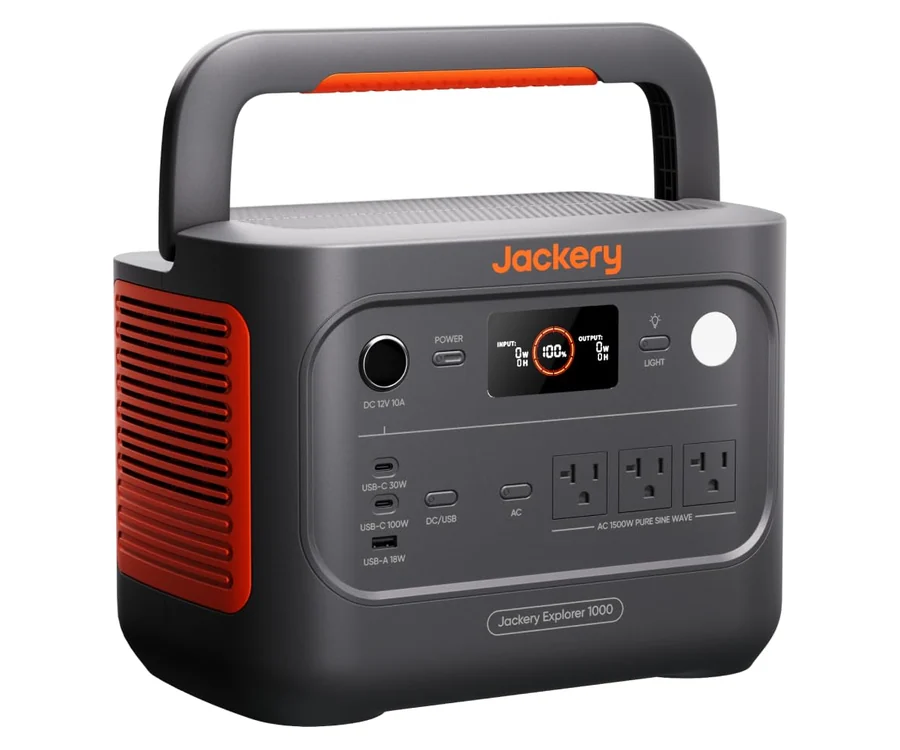
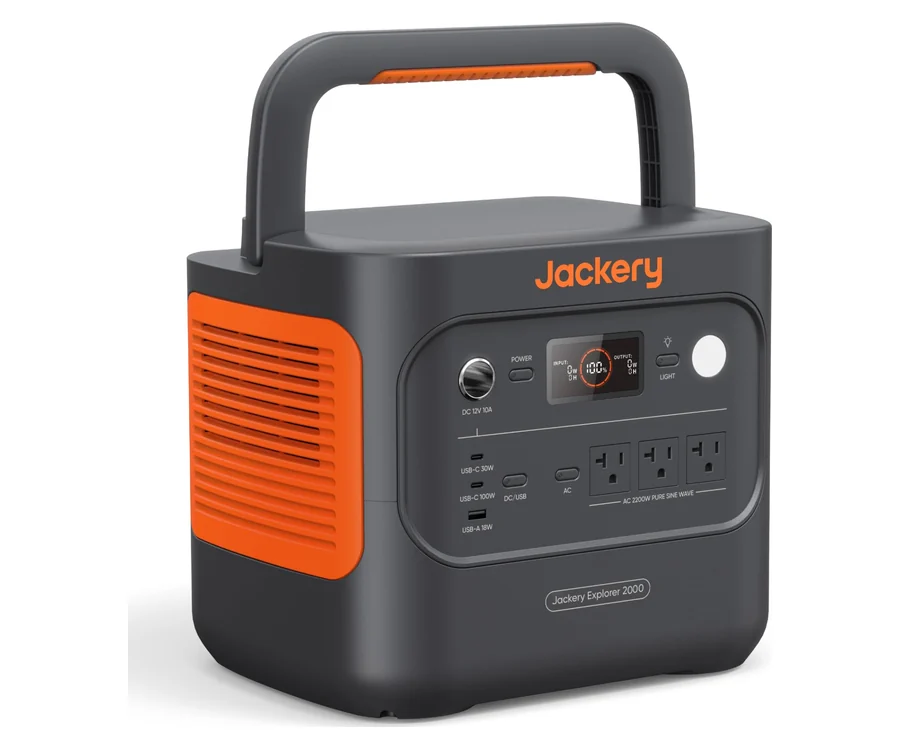
The Explorer 2000 v2 and EcoFlow DELTA Pro are capacity-oriented options to investigate in this catalog. The Explorer 1000 v2 and BLUETTI Elite 100 V2 provide smaller reference configurations for more limited load lists. Do not infer multi-day coverage from these classifications.
For a specific buying decision, use the comparison tool, inspect package contents, and confirm final price and delivery. Keep your emergency operating plan separate from the purchase: charge levels, extension-cord ratings, placement and periodic checks all need attention.
Build an essential-load buying worksheet
This guide is for choosing equipment before a purchase. Start with the smallest set of devices that makes the interruption manageable, rather than asking a portable station to duplicate your normal household use. Record each device’s average load, operating hours, connection and startup requirement. Mark anything that must run continuously.
A hypothetical 20W networking setup used for eight hours needs 160Wh. Add four hours of a 10W light and a 100Wh allowance for charging electronics, and the load-side total is 300Wh. At an assumed 80% usable-energy allowance, the rated-capacity target is 375Wh before reserve. A refrigerator or another cycling appliance requires its own measured-energy entry; do not quietly assume that it fits the remaining budget.
| Requirement | What to record | Why it changes the choice |
|---|---|---|
| Simultaneous loads | Running watts and startup demand | Sets the output screen |
| Energy over the interruption | Measured Wh or average W × hours | Sets the capacity screen |
| Recharging opportunity | Input source and available time | Changes the needed reserve |
| Connections | Voltage, plugs and adapters | Determines compatibility |
Buy for one recharge interval, then test the longer plan
The important duration is the time until the next dependable recharge, not the name of an outage scenario. If grid power is your only input, that interval may be the entire interruption. If solar is available, model an unfavorable day as well as a useful one. A vehicle charging option must be supported by the station and the relevant charging equipment.
A 100W constant load for ten hours consumes 1,000Wh at the devices. Under the same illustrative 80% allowance, that requires 1,250Wh of rated capacity before reserve. This explains why a 1,024Wh reference unit does not meet that example simply because it can supply 1,800W at a moment in time. Use capacity and output as separate filters.
Compare Explorer 1000 v2 and 2000 v2 →Build a load-based shortlist →
Compare the complete system before selecting a model
For a larger portable setup, investigate Explorer 2000 v2 and Elite 200 V2 against the actual worksheet. For a roughly 1kWh setup, DELTA 3 and DELTA 3 Plus are worth comparing when charging and USB connections matter. These are candidates to inspect, not a guarantee that every load in a house will operate.
Budget for the whole configuration, including optional panels, compatible extra batteries and cables. Portable appliance backup and supplying home circuits are separate projects. Any home connection needs equipment and installation appropriate to that system; a list of AC outlets is not evidence that a unit can be connected to household wiring.
Once the purchase decision is made, use the outage plan for charging, storage, device priorities and checks before power is lost. That operational checklist has a different job from this buying worksheet.
Compare DELTA 3 and DELTA 3 Plus →Plan the before/during/after outage routine →
Inspect the exact configurations
Reference specifications and dated prices are available on each product page. Confirm package contents and final price on Amazon.
| Model | Battery capacity | Next step |
|---|---|---|
| Jackery Explorer 2000 v2 | 2042Wh | View product Check Price on Amazon |
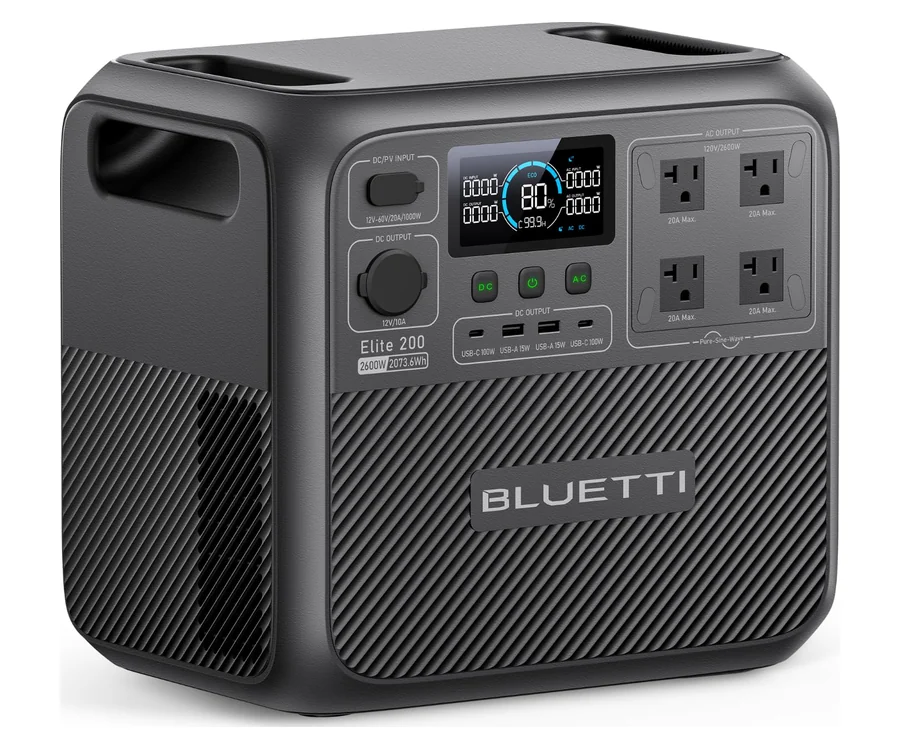 BLUETTI Elite 200 V2 | 2080Wh | View product Check Price on Amazon |
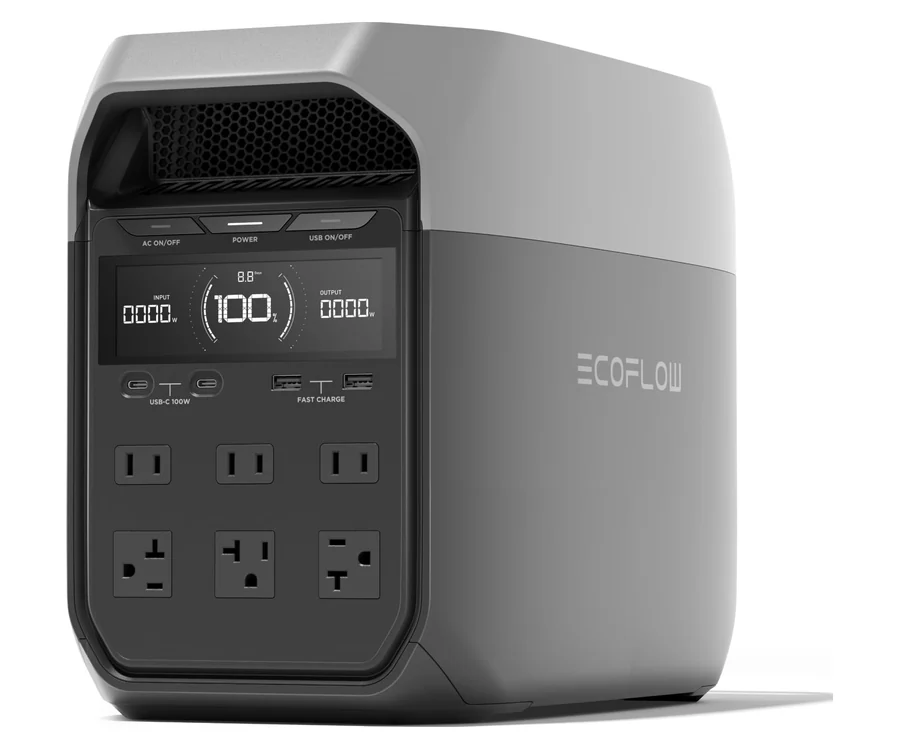 EcoFlow Delta 3 | 1024Wh | View product Check Price on Amazon |
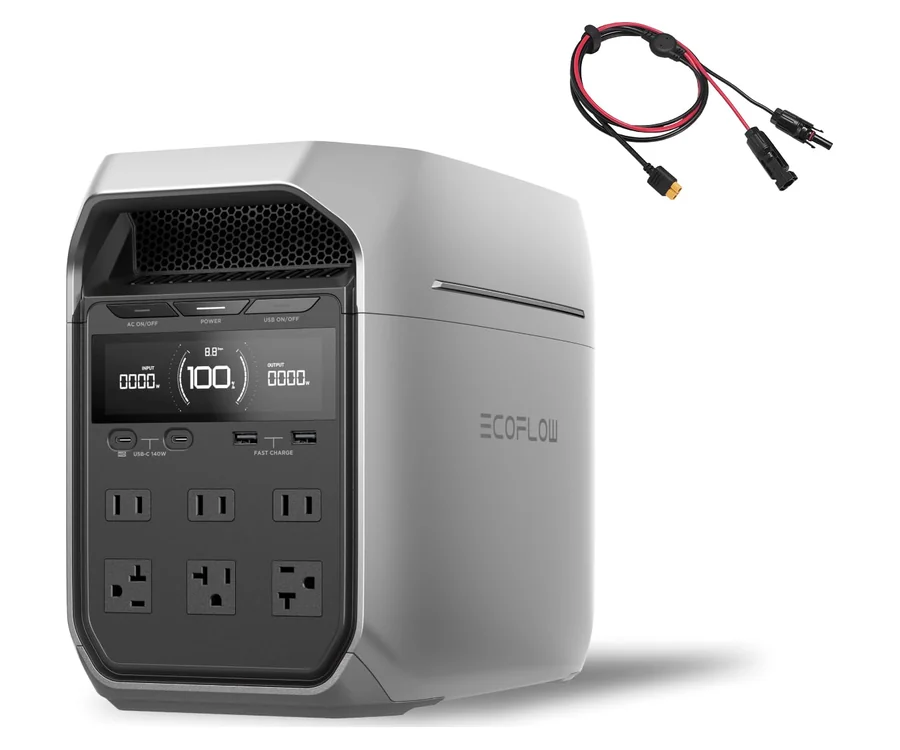 EcoFlow DELTA 3 Plus | 1024Wh | View product Check Price on Amazon |
Sources and manufacturer references
- EcoFlow DELTA 3 US specifications
- EcoFlow DELTA 3 Plus US specifications
- Jackery Explorer 2000 v2 US specifications and solar kits
References checked November 29, 2026. Specifications and availability can change.
Choose your next step
Use a related guide to resolve your remaining questions, or compare catalog models when you have a shortlist.
Compare power stations Explore products