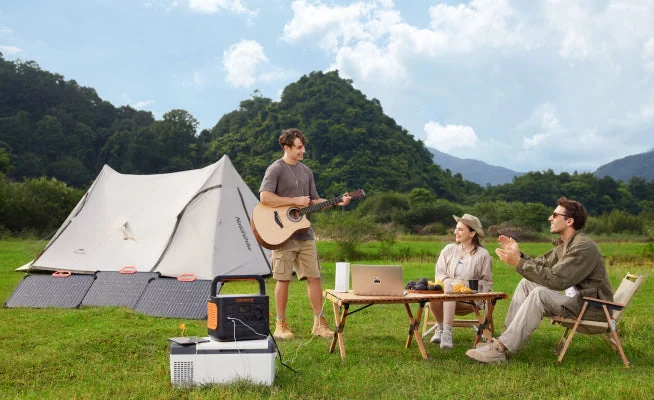
Build a trip energy budget
For camping, the best portable power station depends on what you bring and whether you can recharge. List phones, lights, camera batteries, a laptop and any powered cooler separately. A small unit may suit charging electronics yet be undersized for a refrigerator over several days.
An illustrative trip budget might include a 10W light for five hours and a 40W laptop load for two hours: 130Wh before phone charging, conversion losses and reserve. Repeat the calculation for every day away from an outlet. These figures describe example loads, not tested device or station performance.
Compact candidates versus larger setups
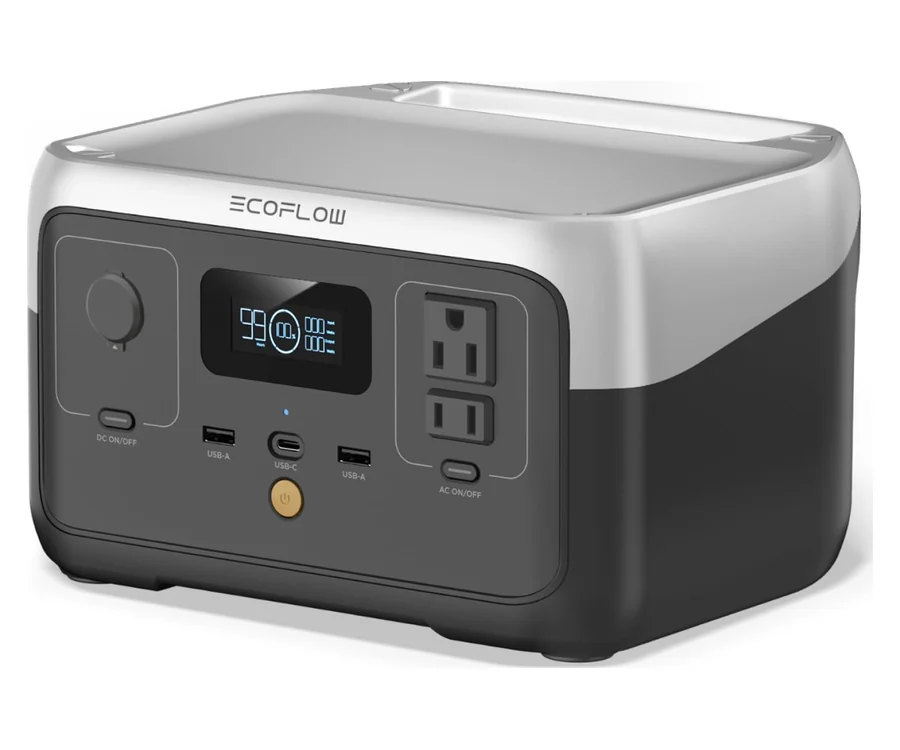
The Jackery Explorer 300 and EcoFlow RIVER 2 are compact-capacity candidates in this catalog. Compare their output types and actual package weight before deciding what you want to carry. Neither is an automatic recommendation for a full weekend with a fridge.
If you have a larger load list, investigate the Explorer 1000 v2 and BLUETTI Elite 100 V2. Both reference configurations advertise 1,024Wh, giving a different energy budget from the smaller units. More capacity also means more equipment to transport; compare dimensions and carrying weight alongside energy.
Do you need solar at the campsite?
Solar is useful when the campsite has suitable light and you can place panels securely. Trees, clouds, panel angle and short winter days can reduce charging. A panel’s rated watts are not a guaranteed constant input.
For a short trip, a fully charged battery may be simpler than adding panels. For a longer stay, calculate daily consumption and a conservative recharge plan. Check the station’s input voltage, current and connector requirements before choosing a panel or adapter.
Check the practical details
Keep the station dry and follow its temperature and ventilation instructions. Do not assume outdoor marketing means the complete unit is waterproof. Check campground rules, and plan where cables will run so people will not trip over them.
Use the product pages to inspect exact configurations. If you will power a CPAP or a camping fridge, read the dedicated planning guide first; those loads need more careful compatibility and runtime checks than charging a phone.
A worked camping budget: count energy, not just devices
Consider a hypothetical two-night trip with a 10W light used for four hours each night, a laptop that consumes 120Wh over the trip, and phones that consume another 40Wh. The load-side budget is 240Wh: 80Wh for lighting plus 160Wh for the electronics. These are example inputs, not typical-consumption promises for those devices.
At an assumed 80% usable-energy allowance, 240Wh at the devices calls for at least 300Wh of rated capacity before adding a separate reserve. A 256Wh or 292Wh station would fall short of that particular assumption even if it has all the right sockets. Shortening laptop use, arranging a recharge or choosing a larger battery are different solutions; buying more AC output alone does not add energy.
| Load | Use over the trip | Energy at the device |
|---|---|---|
| Light | 10W × 8 hours | 80Wh |
| Laptop | Measured trip allowance | 120Wh |
| Phones | Measured trip allowance | 40Wh |
| Total | Before losses and reserve | 240Wh |
Choose the carrying burden you can actually manage
For frequent movement between a car and a campsite, the station is only part of the load. Add the panel, cables, adapters and a protective carrying solution to the equipment you must transport. A larger unit that stays in the vehicle is a different proposition from one carried to a walk-in site.
The Elite 30 V2, RIVER 2 and Explorer 300 are starting points for examining smaller energy budgets, not interchangeable recommendations. The Elite 100 V2 and AC180 move the comparison into a larger capacity class. For those two, compare the extra stored energy against weight and input limits rather than choosing on the product number alone.
Decide whether solar is essential or optional
If the trip must work without sunshine, choose and ration battery energy as though solar contributes nothing. If a panel is part of the plan, confirm that you can place it in useful sunlight while keeping the power station in the conditions required by its manual. Shade at a desirable campsite can undermine a solar-dependent energy budget.
Before buying a larger panel bundle, compare your likely daily consumption with a conservative recharge scenario. A second panel helps only when the station accepts the connection, input and placement you propose. Use the solar setup guide for that separate decision, then inspect the exact package instead of treating every picture of a panel as included equipment.
Check solar input and kit contents →Inspect Elite 30 V2 configurations →
Inspect the exact configurations
Reference specifications and dated prices are available on each product page. Confirm package contents and final price on Amazon.
| Model | Battery capacity | Next step |
|---|---|---|
| EcoFlow RIVER 2 | 256Wh | View product Check Price on Amazon |
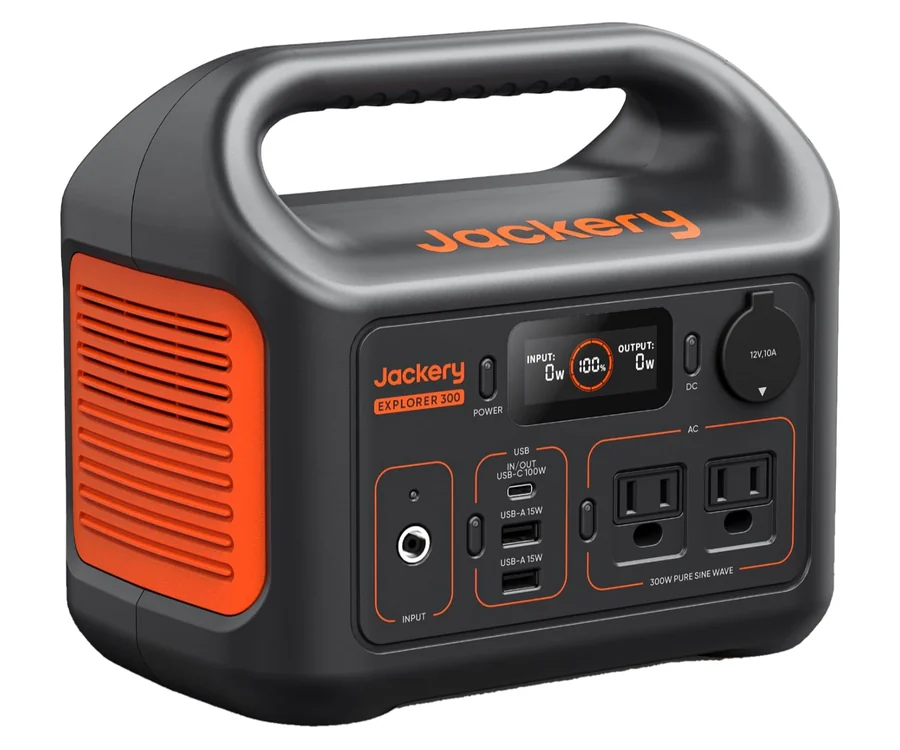 Jackery Explorer 300 | 292Wh | View product Check Price on Amazon |
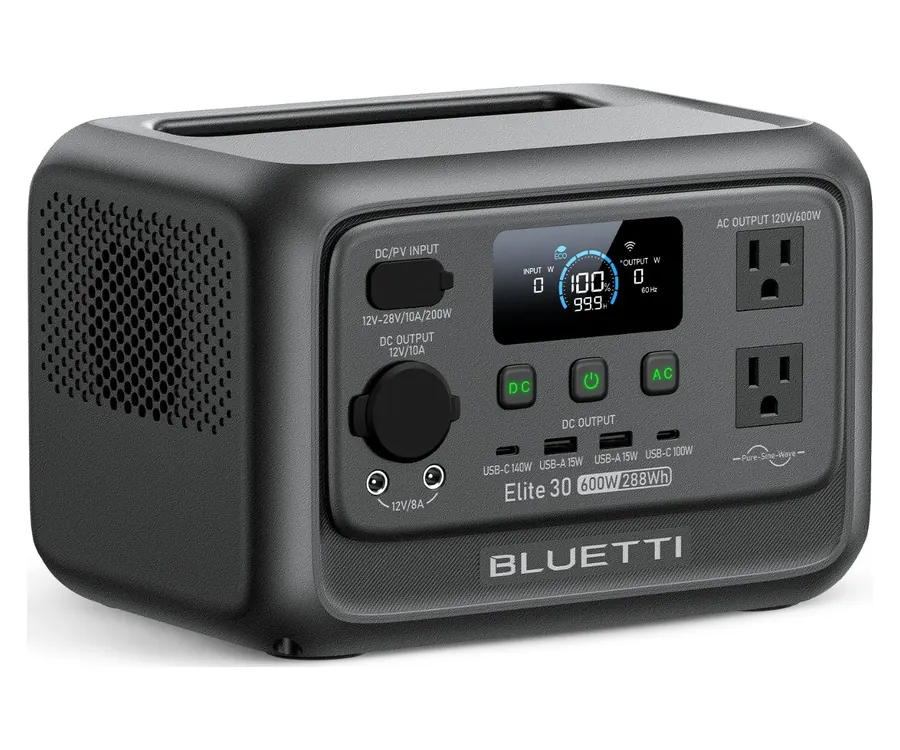 BLUETTI Elite 30 V2 | 288Wh | View product Check Price on Amazon |
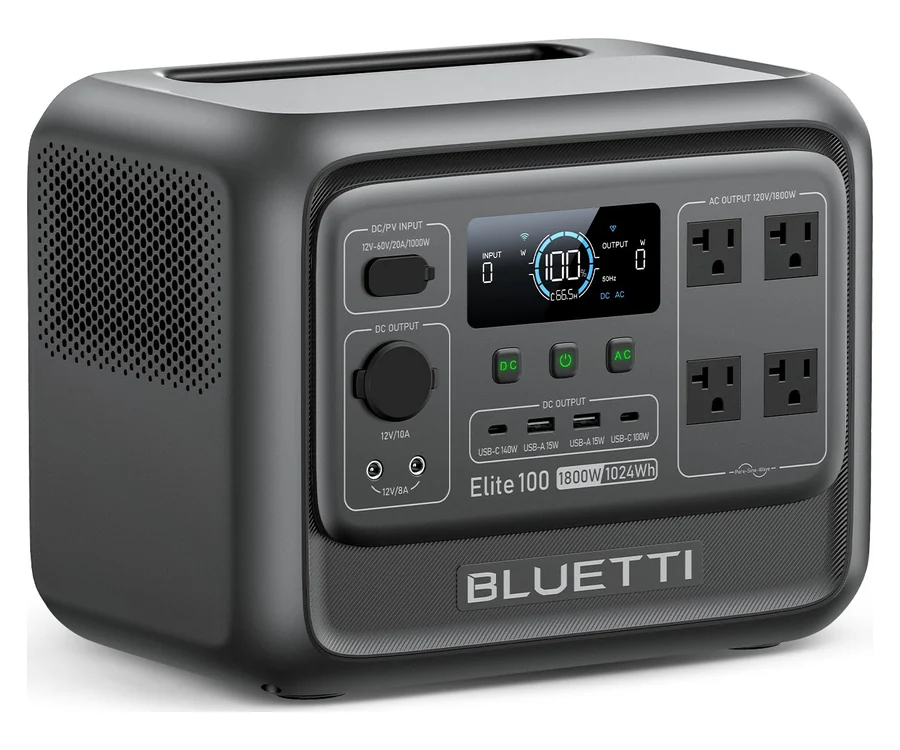 BLUETTI Elite 100 V2 | 1024Wh | View product Check Price on Amazon |
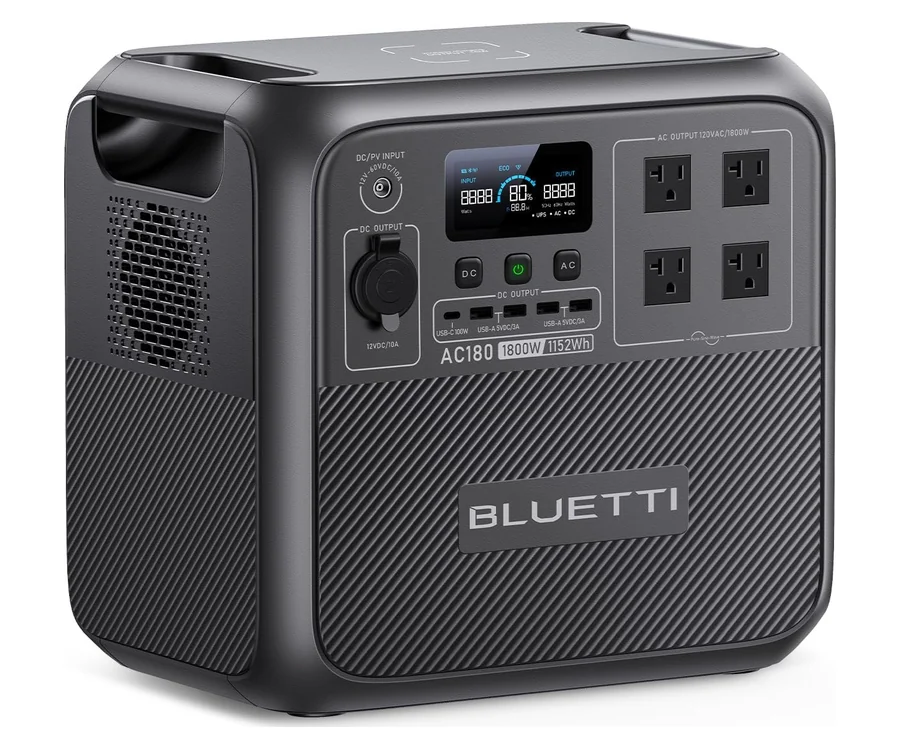 BLUETTI AC180 | 1152Wh | View product Check Price on Amazon |
Sources and manufacturer references
References checked November 29, 2026. Specifications and availability can change.
Choose your next step
Use a related guide to resolve your remaining questions, or compare catalog models when you have a shortlist.
Compare power stations Explore products